


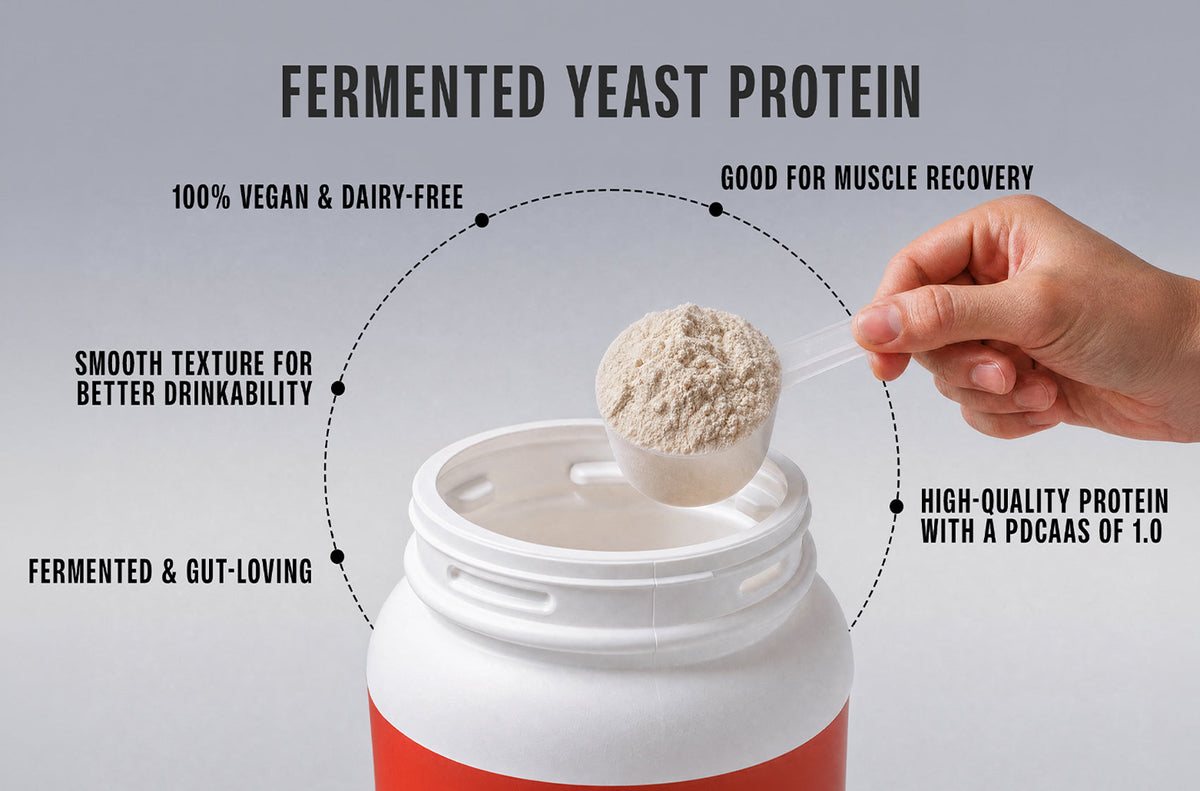
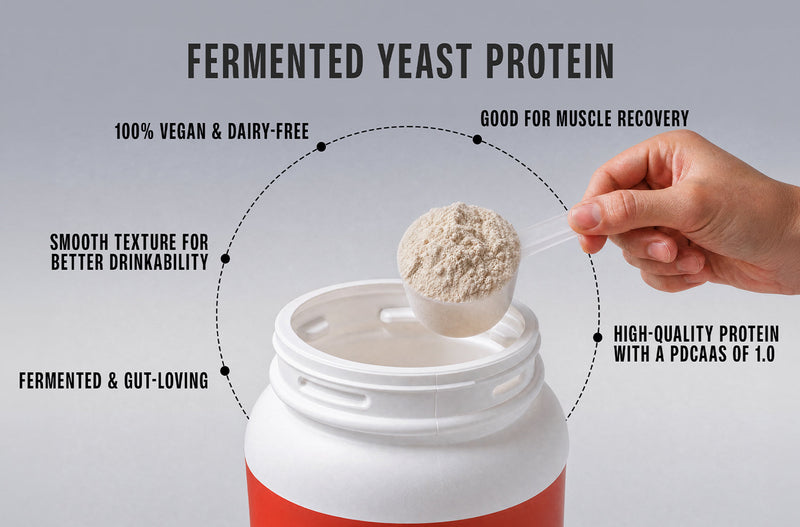

If you've spent any time in an Indian gym's WhatsApp group - or on fitness Instagram and YouTube lately - you've probably seen the phrase "fermented yeast protein" pop up. It sounds like it should be complicated -yeast, usually associated with bread and beer, turned into a protein powder -but the actual story is simpler than it sounds and worth understanding before you pick a side in the whey-versus-plant debate that seems to follow every fitness conversation in India right now.
What fermented yeast protein actually is
Fermented yeast protein comes from Saccharomyces cerevisiae - the same yeast used in baking bread and brewing beer, just processed differently. It's not an animal product like whey, and it's not a legume or seed extract like pea or soy protein. It sits in its own category, sometimes called a microbial or fermentation-derived protein.
The fermentation step does more than concentrate protein. It also breaks down anti-nutrients like phytic acid, which would otherwise block how well your body absorbs amino acids - that's why fermentation unlocks better protein than a raw, unprocessed extract. It's the same idea behind fermenting idli batter or dhokla - fermentation changes what your body can actually use, not just the texture.
How is fermented yeast protein made
The process is closer to brewing than most people expect. A specific yeast strain is fed a carbon source - often sugarcane molasses, widely available in India - inside large, temperature- and pH-controlled tanks called bioreactors. The yeast cells multiply and build up their protein content over a couple of days.
Once the biomass reaches the right density, it's harvested by spinning out the yeast cells, which are then broken open to release the protein trapped inside. The protein is purified - separated from cell wall material and nucleic acids - then spray-dried into the fine powder that eventually gets flavoured and packed into a tub. Exact steps vary by manufacturer, but this arc - ferment, harvest, break open, purify, dry - is consistent across genuine bio-fermented products.
Fermentation-based production also tends to use a fraction of the land and water that animal-based protein needs, which is part of why the ingredient has picked up momentum well beyond India.
A note worth knowing before you buy: not every product labelled "yeast protein" goes through this full process. Some brands use commodity yeast powder - essentially a manufacturing byproduct - rather than genuine biofermentation, and label it the same way. Look for brands that explicitly state Saccharomyces cerevisiae fermentation and publish batch-level testing, rather than taking the label at face value.
Is fermented yeast protein as good as whey?
On protein quality, yes. The standard measure is PDCAAS (Protein Digestibility-Corrected Amino Acid Score), which scores how complete and well-absorbed a protein is. Fermented yeast protein can hit a PDCAAS of 1.0 - the maximum possible score, matching whey isolate. Most single-source plant proteins score lower, since they're missing one or two amino acids. Here's the full breakdown of PDCAAS and DIAAS if you want to see how the number is actually calculated.
It's also rich in the branched-chain amino acids - leucine, valine, and isoleucine - the ones most directly tied to muscle repair. And it naturally carries more fibre, B-vitamins, and minerals like zinc and selenium than whey or soy isolate, since none of that gets stripped out during processing.
Does it actually help build muscle? Yes - because it delivers all nine essential amino acids in a complete, well-absorbed profile, it supports muscle repair and growth the same way any high-quality complete protein does. It's not a shortcut beyond that; results still depend on training and total protein intake, the same as with whey.
How does it compare to whey and plant protein?
Vs. whey: Whey is fast-absorbing and well-studied, but it's dairy-based, so lactose sensitivity and bloating are common complaints. See the full whey comparison here.
Vs. soy: Soy is one of the few complete plant proteins, but it's a common allergen and harder to digest for some people. See the full soy comparison here.
Vs. pea, rice, and other plant proteins: These are usually incomplete alone, which is why most "plant protein blends" stack four or five sources together. Fermented yeast protein is complete on its own, so there's no blend needed.
Digestion: the most common reason people switch
A large share of the conversation around fermented yeast protein isn't really about muscle -it's about the gut. This is actually the most common reason people switch to it. Fermented yeast is naturally lactose-free, and the fermentation process tends to be gentler on the gut than raw isolates - here's more on why lactose-sensitive people specifically benefit. If your issue goes beyond general sensitivity - IBS or acid reflux, for example - ingredient choice matters even more.
Who should use fermented yeast protein?
-
Anyone with lactose intolerance or dairy sensitivity - whey-level protein quality, no dairy downside
-
Vegans and strict vegetarians - a complete protein that isn't soy-based, which is rare
-
Athletes and regular gym-goers - a reliable amino acid source for recovery
Clearing up two common mix-ups
Is "fermented protein powder" the same as "fermented yeast protein"? No. Fermented protein powder is the broader umbrella term - it can include fermented pea or rice protein too. Fermented yeast protein refers specifically to the Saccharomyces cerevisiae-derived category covered in this guide.
Is fermented yeast protein the same as nutritional yeast? No. Nutritional yeast is the popcorn-topping seasoning, with only 3–8g of protein per serving. Fermented yeast protein is isolated and concentrated specifically to deliver 20g or more per serving - same organism, very different product.
How to actually use it day to day
It behaves like any other protein powder: mix it into water or milk for a shake, blend it into a smoothie, or stir it into oats. Some brands note it holds up fine in baking too. Most people take one serving post-workout or as a meal top-up, not as a meal replacement. If a daily shake isn't your thing, protein wafers built on a fermented yeast blend are a snackable alternative.
If you're switching from whey or a plant blend, ease in with smaller servings for a week or two before working up to a full scoop - the same way any new fibre-rich food needs a short adjustment period. Most people won't need this, but it helps if you've had a sensitive stomach before.
Is fermented yeast protein safe?
Yes, for most people. The things worth knowing:
-
Digestive adjustment: A mild adjustment period in the first week or two is normal, the same as with any new food.
-
Yeast allergy: Rare, but if you have a known yeast allergy, check with a doctor first.
-
Medication interaction: Yeast-derived products can naturally contain tyramine, which interacts specifically with MAOI antidepressants. If you're on that medication class, check with your doctor. This isn't a concern for most other common medications.
-
GRAS status: Fermented yeast protein from reputable manufacturers is generally recognized as safe (GRAS) for regular use - though safety in practice depends heavily on the specific brand's manufacturing standards.
A few more common questions, answered directly
Is it vegan? Yes. It's derived from a microorganism, not an animal, and no animal products are involved anywhere in production.
What does it taste like? On its own, it's neutral and mild - which is why it blends easily into whatever flavour a brand adds, rather than fighting against it the way some stronger-tasting plant proteins can.
Is it non-GMO? It can be - reputable brands test specifically for non-GMO status alongside allergen and heavy-metal screening.
Where SuperYou fits in
SuperYou PRO is built entirely around fermented yeast protein - PDCAAS of 1.0, free of dairy, soy, and gluten, naturally sweetened rather than artificially. Its lab testing covers a wider allergen panel than most brands disclose, including crustaceans, eggs, fish, peanuts, tree nuts, sesame, and sulfites, not just the usual dairy/soy/gluten trio. The range comes in a few flavours, including strawberry, vanilla, kesar badam, chocolate and cold coffee, and can be bought directly through the SuperYou website with delivery across India. Here's how the brand approaches testing and quality control in more detail.
The takeaway
Fermented yeast protein isn't a marketing spin on an old idea - it's a genuinely different protein source that matches whey on quality while avoiding dairy, soy, and gluten entirely. It costs more than pea or soy, and that premium is worth it mainly if digestion, allergens, or a complete amino acid profile from a single source actually matter to you. Whichever reason brought you here, it's worth understanding fermented yeast protein on its own terms rather than filing it under "another plant protein."


