


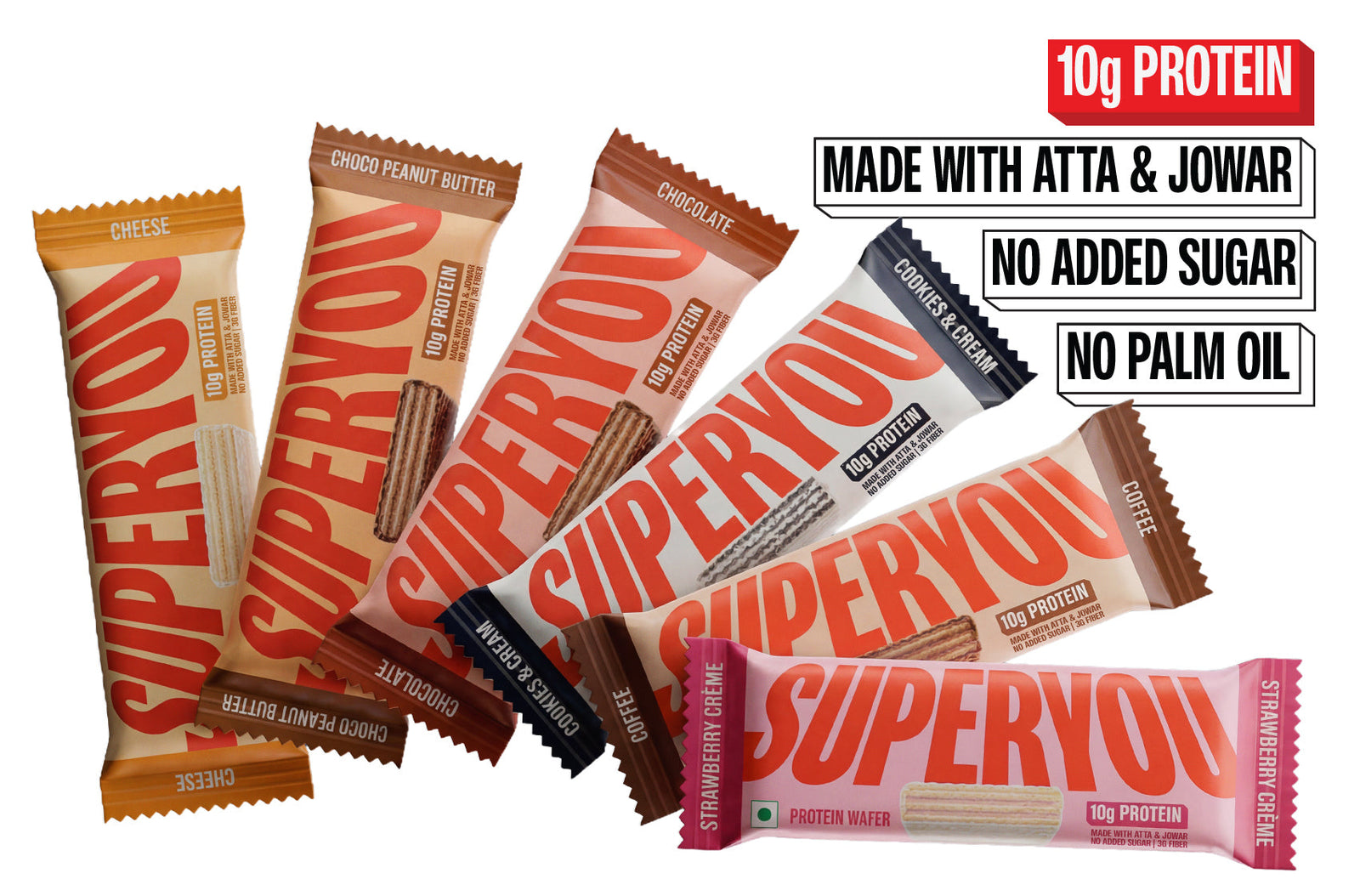
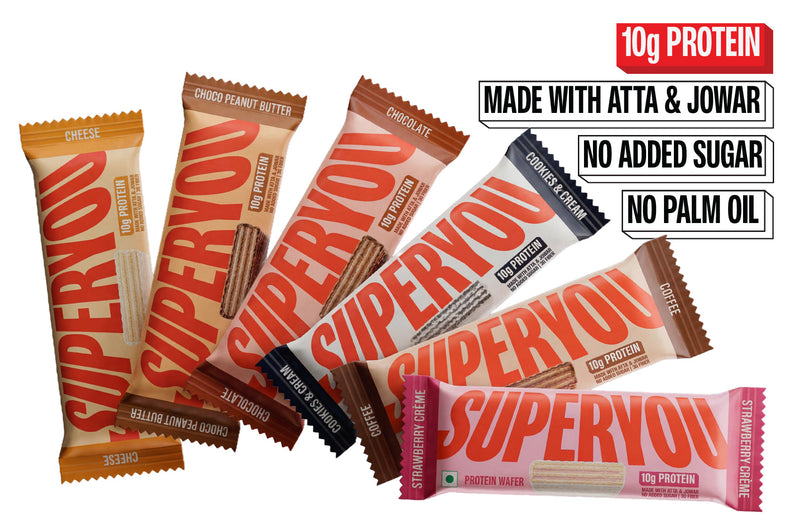

Walk down any snack aisle in India, and you'll find palm oil hiding in a huge share of what's on the shelves - biscuits, chocolates, wafers, chips, and even bread. It's inexpensive, shelf-stable, and semi-solid at room temperature, making it a manufacturer's dream for both texture and cost.
We, at SuperYou, have made "No Palm Oil" one of our most prominent label claims across its entire range, including all our Wafers (with 25-33% protein content), and Multigrain Protein Chips & Puffs (with 25% protein). But what does skipping palm oil actually change about what you're eating? Here's a closer, more balanced look.
Why Palm Oil Gets Singled Out
Palm oil has earned its reputation for two separate reasons that are often grouped together.
The first is nutritional. Palm oil is relatively high in saturated fat, and diets which are extremely high in saturated fat have been associated with elevated LDL ("bad") cholesterol levels over time, if consumed regularly.
The second is environmental. Palm oil production has been linked to large-scale deforestation and habitat loss across the world. Much of the sustainability messaging around palm-oil-free products stems from these environmental concerns.
For a brand built around clean, functional snacking, avoiding palm oil is as much a statement of values as it is a nutritional choice. It signals an effort to create a product positioned as being better for both people and the planet.
What SuperYou Uses Instead
Our products replace palm oil with a mix of coconut, soy, till and edible rice bran oil, depending on the flavour and the exact product requirement. And we are transparent about this substitution, positioning it as a more thoughtful choice for both consumers and the environment.
These oils also have their own nutritional profile. Let’s take coconut oil. It is a good source of fats and it doesn't carry the same deforestation-related environmental concerns commonly associated with palm oil. Functionally, it also helps create the crisp, snappable layers that define a wafer or a chip, rather than producing a denser or greasier texture.
What "No Palm Oil" Doesn't Tell You
A "No Palm Oil" label is a useful signal, but it isn't a complete nutritional summary.
It doesn't tell you how much saturated fat the product contains, whether trans fats are present from other ingredients, or how its overall fat profile compares with that of a product made with palm oil.
Other oil-based products can contain lower, similar-or even higher-levels of fats than products made with palm oil. The primary difference lies in the source of the fat, the quantity in which it is used, and its environmental impact.
If saturated fat or trans fat intake is a specific concern, it's always worth reading both the ingredient list and the nutrition panel at the back.
The Bigger Picture
Having "No Palm Oil" with “No Trans-fat” in any product, with the same taste and texture as that made with palm oil, is also hard to crack. Our decision to avoid it across its product range is a genuine formulation choice, specifically for the consumers, rather than simply a marketing checkbox. The claim is reflected consistently across ingredient lists and product documentation, and it aligns with a broader movement among newer Indian snack brands towards more sustainability-conscious sourcing.
It can be best understood as one deliberate ingredient choice within a broader-and still evolving-product formulation.


