



You train hard, hit your protein target, and still end up bloated, gassy, or just "heavy" an hour after taking your shake. If that sounds familiar, you're not imagining it and it's probably not a fake supplement either. The real story is something most Indian fitness content skips entirely: the gut-muscle connection, and what it means for how much of that protein you're actually using.
What Is the Gut-Muscle Axis, Really?
Scientists call it the gut-muscle axis - a two-way relationship between your gut microbiome and your muscles. Your gut bacteria don't just handle digestion; they influence how efficiently amino acids get absorbed, how much inflammation circulates through your body, and ultimately how much of your dietary protein gets converted into actual muscle repair. A 2019 position paper from the International Society of Sports Nutrition on probiotics noted that certain bacterial strains can improve amino acid absorption and help break protein down into forms the body can use more efficiently. In plain terms, a stressed, inflamed gut can quietly cap your gains, no matter how clean your diet looks on paper.
Why This Hits Indian Gym-Goers Harder
Here's the part that rarely gets said out loud: thanks to our busy, always-on-phone lifestyles, a lot of us don't have the best digestion to begin with. Yet most default protein powders in India are still whey-based, the form with the highest lactose load. That's a big part of why "bro, this protein bloats me" is one of the most common complaints on Indian fitness forums and social threads.
The frustrating bit is that people usually assume they've got a bad batch and switch products two or three times before realizing the actual issue is digestion, not the product itself. According to ICMR-NIN dietary guidelines, sedentary adults need about 0.83g of protein per kg of body weight. Active adults need more roughly 1.2–1.5g/kg. But that's a tough target to hit every day if your protein shake leaves you feeling uncomfortable enough to skip the next one.
Fixing the Input, Not Just the Workout
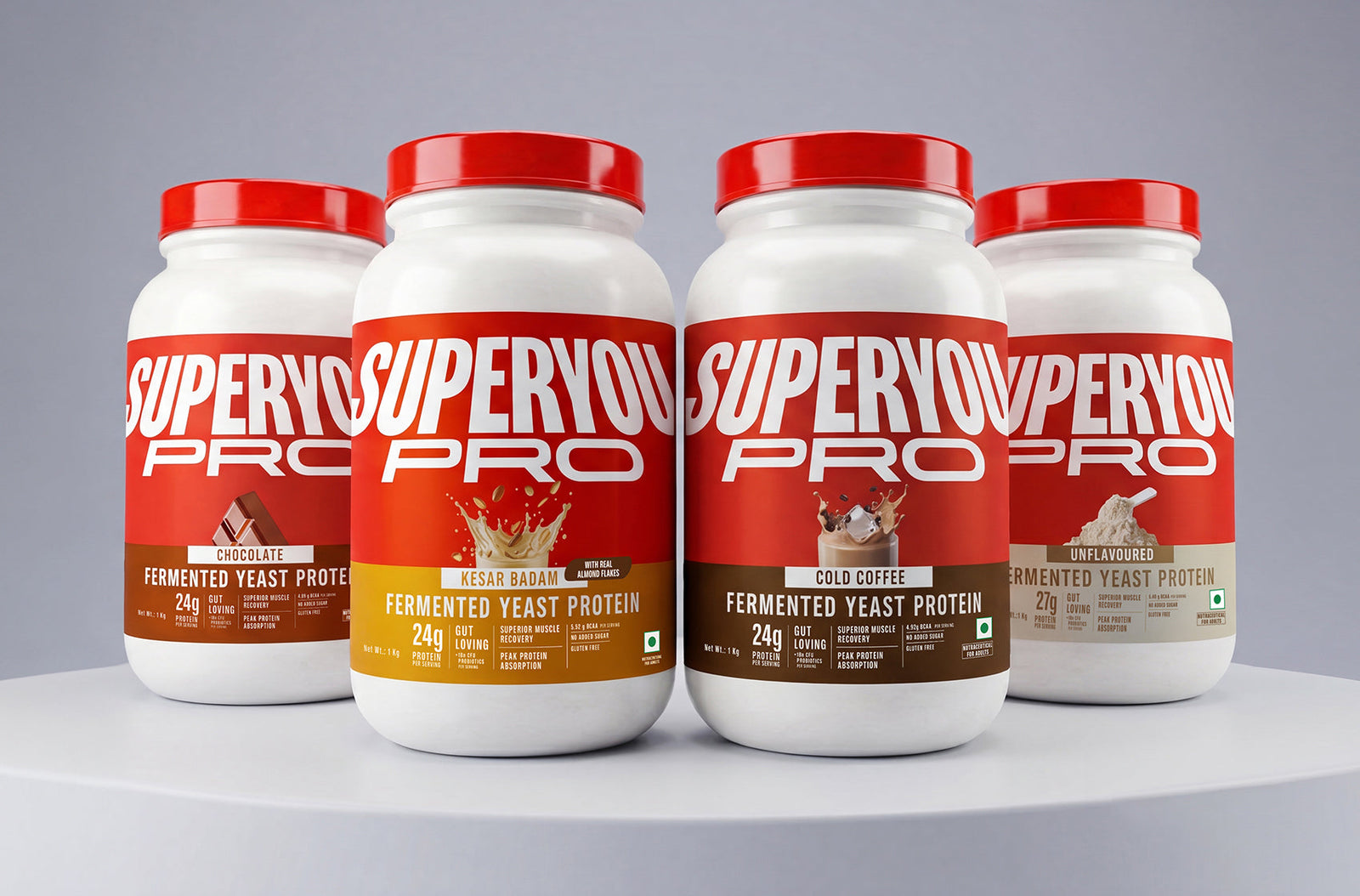
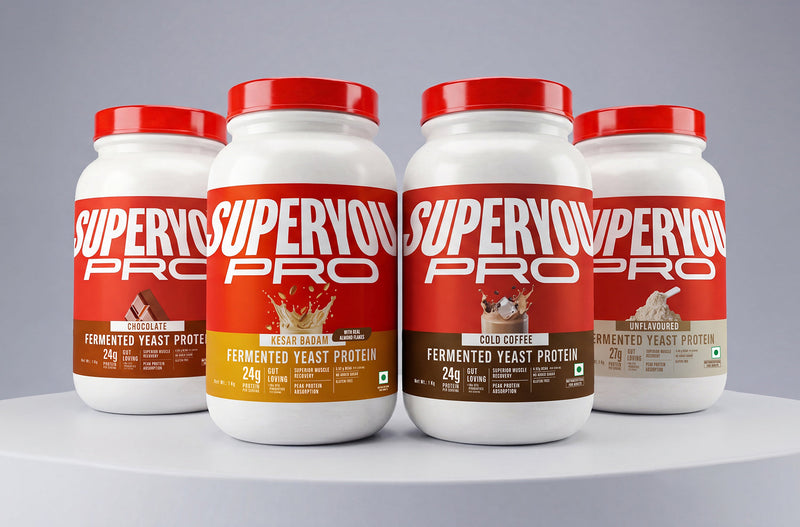
This is where fermented yeast protein has started getting real attention as a category. Made by fermenting yeast rather than extracting protein from milk, it's naturally dairy-free and lactose-free, while still delivering a complete amino acid profile - SuperYou Pro, for instance, carries a PDCAAS score of 1.0, on par with whey, without the digestive load that trips people up. It's less about swapping one protein for another and more about removing the one variable—lactose—that's been quietly working against your gut this whole time.
And it doesn't stop at just being easier on digestion SuperYou Pro also comes with 3g of fiber per scoop and 1 billion CFU of probiotics added in, so instead of just avoiding gut irritation, you're actively supporting it with every scoop.
Of course, fixing your protein source is only half the picture. what you're snacking on around it matters just as much.
Pro Tip: A 4 PM regular biscuit or namkeen binge does nothing for muscle repair and often adds to gut inflammation from refined oils and added sugar. Swapping that slot for something like SuperYou's protein wafer, multigrain protein puffs, or protein chips pack keeps the day's protein total moving up without adding the empty-calorie baggage and the added sugar guilt.
Small swaps like this in your shake and your snack drawer are what actually add up to a happier gut and a stronger streak over a month, rather than any single "miracle" fix.
FAQs
Is fermented yeast protein as effective as whey for muscle building?
Yes, our fermented yeast protein scores a PDCAAS of 1.0, matching whey's amino acid completeness.
Why does whey protein cause bloating for so many Indians?
Largely lactose. Whey concentrate retains more lactose than isolate or hydrolysate, and with 60–70% of Indian adults having some lactose sensitivity, that residual lactose is the most common trigger for post-shake bloating—not necessarily product quality.
Are protein wafers or chips a real substitute for a protein shake?
Not a full substitute, but a useful supplement to daily intake. A 10g-protein wafer or chips pack won't replace a 25g shake, but it's a meaningfully better choice than a regular biscuit or namkeen packet when you're trying to hit a daily protein target without added sugar or empty calories.
The Takeaway
Muscle isn't built by protein grams alone—it's built by what your gut actually lets you absorb. If shakes have been leaving you bloated, the fix usually isn't more discipline—it's a different protein source. Start by checking what's actually in your scoop.


