


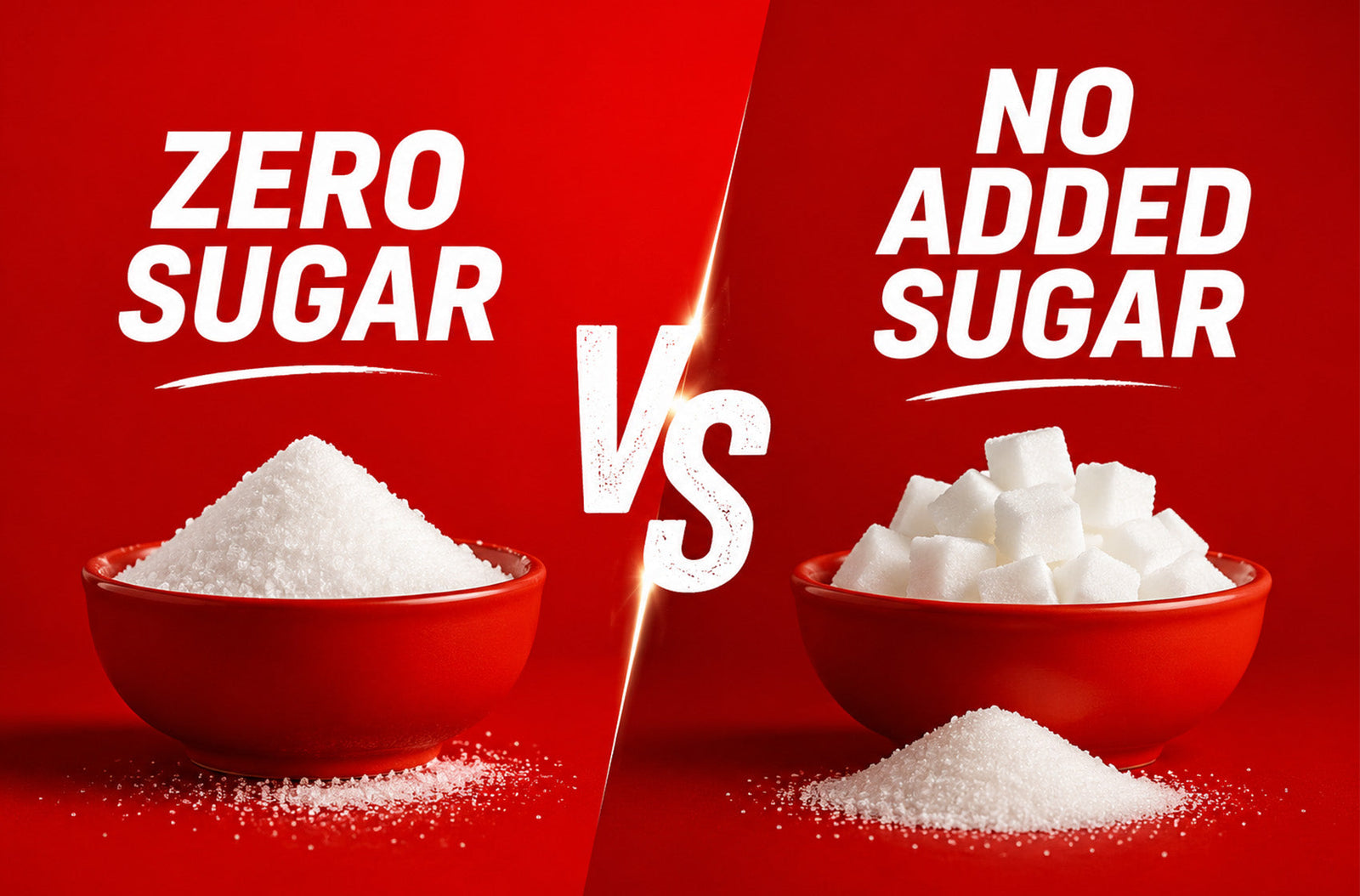

Pick up almost any protein product in India and there's a decent chance the front of the pack says one of two things. “Zero added sugar”, or, “No sugar”. Most people glance at either phrase, assume they mean the same thing, and move straight to checking the protein number instead.
They don't mean the same thing though. And the gap between them is bigger than it looks, particularly if you're someone who actually tracks intake or you're dealing with something where sugar genuinely needs watching.
So, where does the confusion actually come from?
What Zero Added Sugar Really Means on a Label
Zero added sugar is a narrow, specific claim. It tells you nothing was added during manufacturing. No cane sugar mixed in, no syrups, nothing dropped into the batch to make it taste better. What it doesn't tell you is whether the finished product has zero sugar in total.
This is exactly where people get tripped up. A fruit bar can say zero added sugar and still carry plenty of natural sugar from the fruit itself. That's completely normal and exactly what you want as long as that sugar comes naturally from real fruits rather than being added during processing. A dairy protein can say the same thing while still carrying lactose, which is sugar that occurs naturally in milk whether anyone added it or not. Neither label is dishonest. They're both just answering a smaller question than most people think they're asking.
For protein products specifically, this is relevant because plenty of base ingredients carry natural sugar even when the manufacturer hasn't touched anything extra. Milk-based proteins bring lactose along by default. Some plant proteins carry a small amount of natural sugar depending on where they're sourced from. None of that breaks the zero added sugar claim. It just means the actual sugar column on the nutrition panel can show a number that surprises someone expecting it to read zero.
Why No Sugar Is a Tougher Promise to Keep
No sugar sets a different bar entirely. It means the product, once finished, carries close to no sugar at all, whether that sugar would have come from something added or from an ingredient that naturally contains it.
Making that claim honestly is harder than it sounds. Every single component going into the product, the base protein, the flavour, anything else mixed in, has to contribute nothing meaningful to the sugar count. That immediately rules out a lot of standard protein sources. Whey concentrate usually carries lactose unless someone has gone through the extra step of filtering it out specifically.
This is where fermented yeast protein has a real structural advantage that whey just can't match without extra processing. There's no dairy in it to begin with, so there's no lactose sitting quietly in the base ingredient which might bring some additional naturally occurring sugar, that needs to be stripped out later.
A genuinely low-sugar product is much simpler to create when the main ingredient doesn't naturally contain sugar, even if a small amount of total sugar comes from the natural flavours used.
Who This Distinction Actually Matters For
If you're not someone tracking sugar closely and you just want a reasonably clean protein source, the gap between these two labels probably changes very little day to day. A handful of grams of natural sugar from a dairy protein isn't a real concern for most healthy adults training regularly.
But for a few specific groups, this stops being a minor detail. Anyone managing blood sugar needs the actual number, not reassuring language on the front of a pack. People who are lactose intolerant usually care less about the word sugar and more about what's causing the discomfort in the first place, which is often the lactose itself rather than anything added during manufacturing. And anyone counting macros tightly for a specific goal needs to flip the pack over and read the real figure rather than trust the headline claim.
Two products sitting next to each other on a shelf can make what sounds like an identical promise. Check the nutrition panel on both and one can carry noticeably more sugar than the other, even though the front of both packs reads almost the same.
Quick Answers to the Questions People Actually Ask
Is zero added sugar the same as sugar free?
Not quite. Zero added sugar means nothing extra went in during manufacturing. Sugar free or no sugar means the finished product has essentially none, including whatever sugar might naturally exist in the base ingredients.
Can something be zero added sugar and still affect blood sugar?
Yes, it can, but it depends on where the natural sugar comes from and how much of that ingredient is used. If a naturally sugary ingredient, such as chocolates, fruits, jaggery, dates, forms the base of a product, it can contribute a significant amount of natural sugar and have a greater impact on blood sugar, even without any added sugar. On the other hand, if the same ingredients are used only in small amounts to add flavor or taste, they typically contribute very little sugar. That's why it's always worth checking the nutrition label rather than relying solely on the "zero added sugar" claim on the front of the pack.
In Short
Zero added sugar and no sugar sound almost identical but they're answering different questions. One is about what got added during manufacturing. The other is about what's actually present in the final product, full stop. Most people won't notice the difference day to day, but if sugar matters to you specifically, the nutrition panel will always tell you more than the front of the pack ever will.

